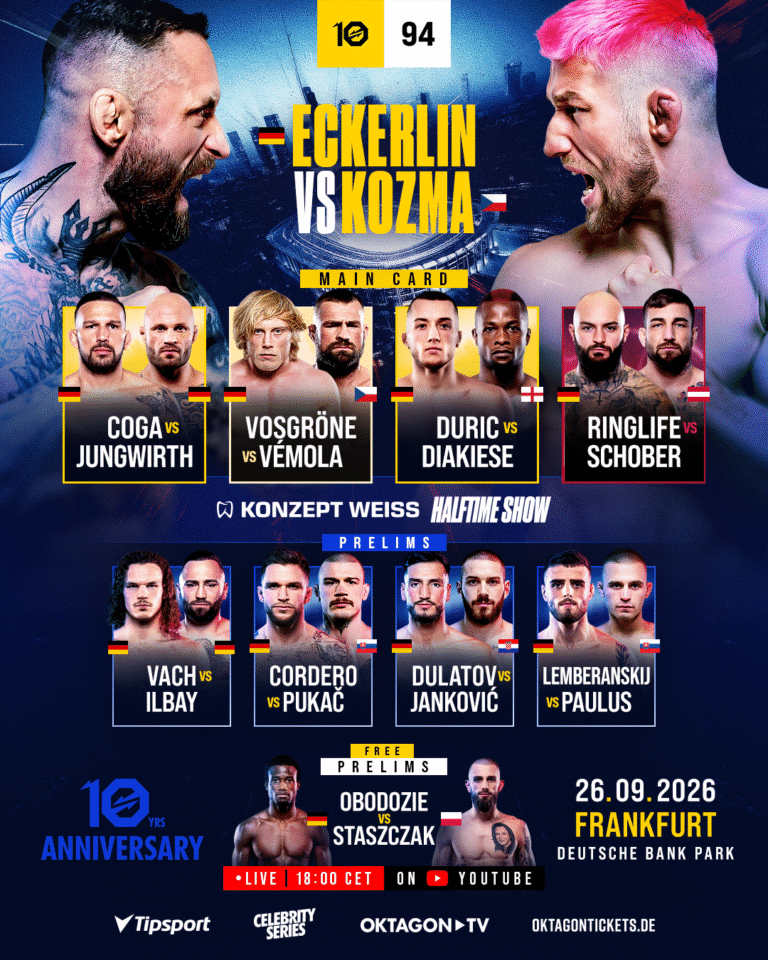
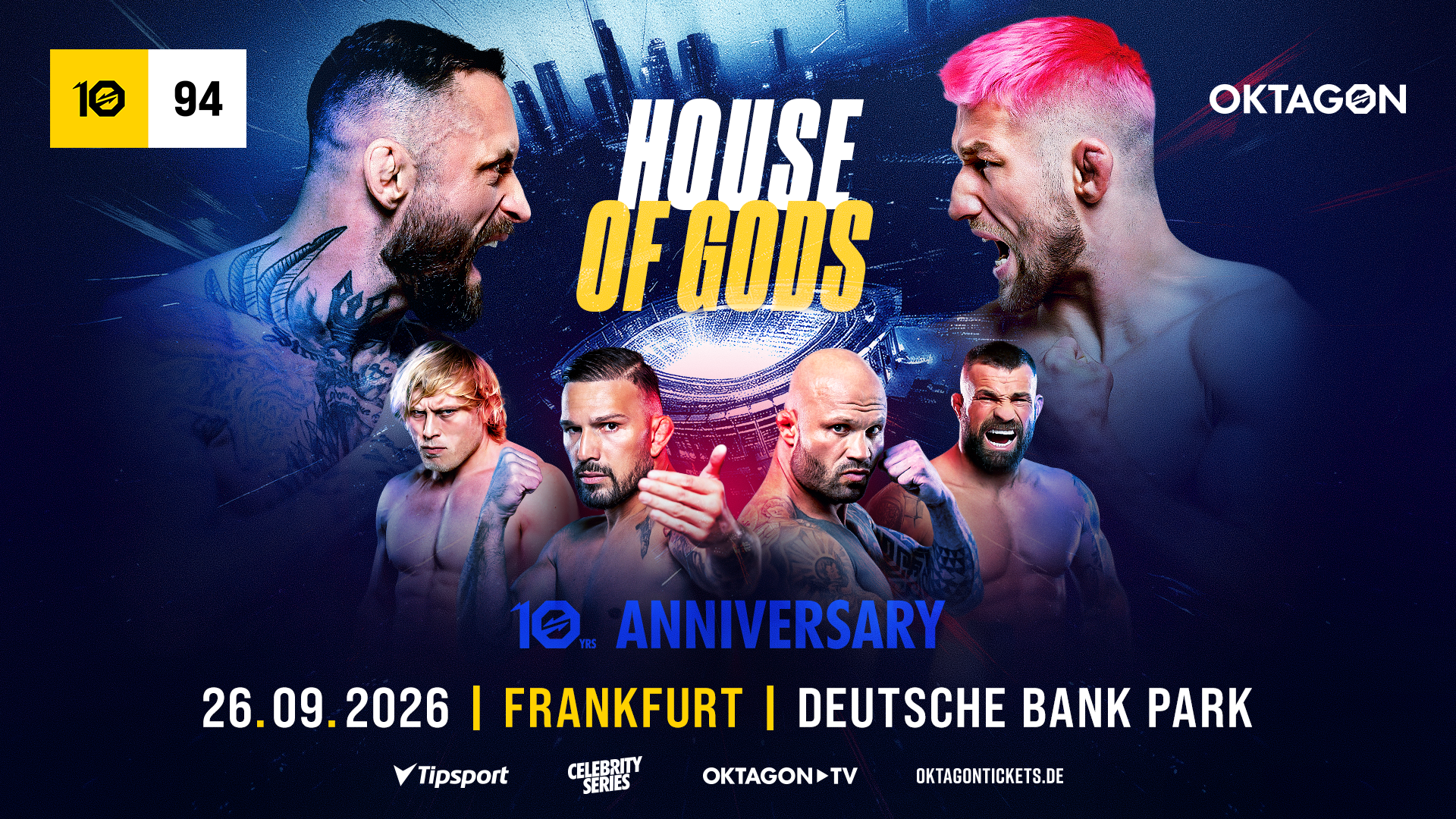
Oktagon, quando le MMA diventano spettacolo. Ci sono eventi sportivi che si guardano. E ce ne sono altri che si vivono. Quello organizzato ieri da Oktagon (promotion con sede nella Repubblica Ceca) a Francoforte (in concomitanza con l’evento n.94 della sua giovane storia) appartiene decisamente alla seconda categoria.
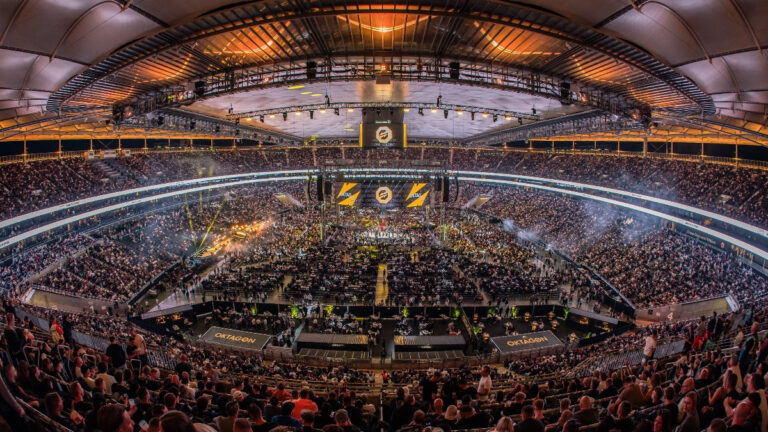
Portare le MMA nel “cuore” del Deutsche Bank Park, la casa dell’Eintracht Frankfurt in Bundesliga1, davanti a circa 60 mila spettatori paganti, non significa semplicemente organizzare una grande serata di combattimenti. Significa avere una precisa idea di cosa debba essere oggi un evento di combat sports.
In dieci anni Oktagon, organizzazione nata nella Repubblica Ceca e diventata progressivamente internazionale (con interessi in Germania, appunto, in Slovacchia e di recente in Polonia), ha costruito un modello che va ben oltre la gabbia. Il combattimento è il centro dello spettacolo, ma intorno al combattimento viene costruito un universo fatto di musica, luci, scenografie, storytelling, tecnologia, ingressi spettacolari e intrattenimento.
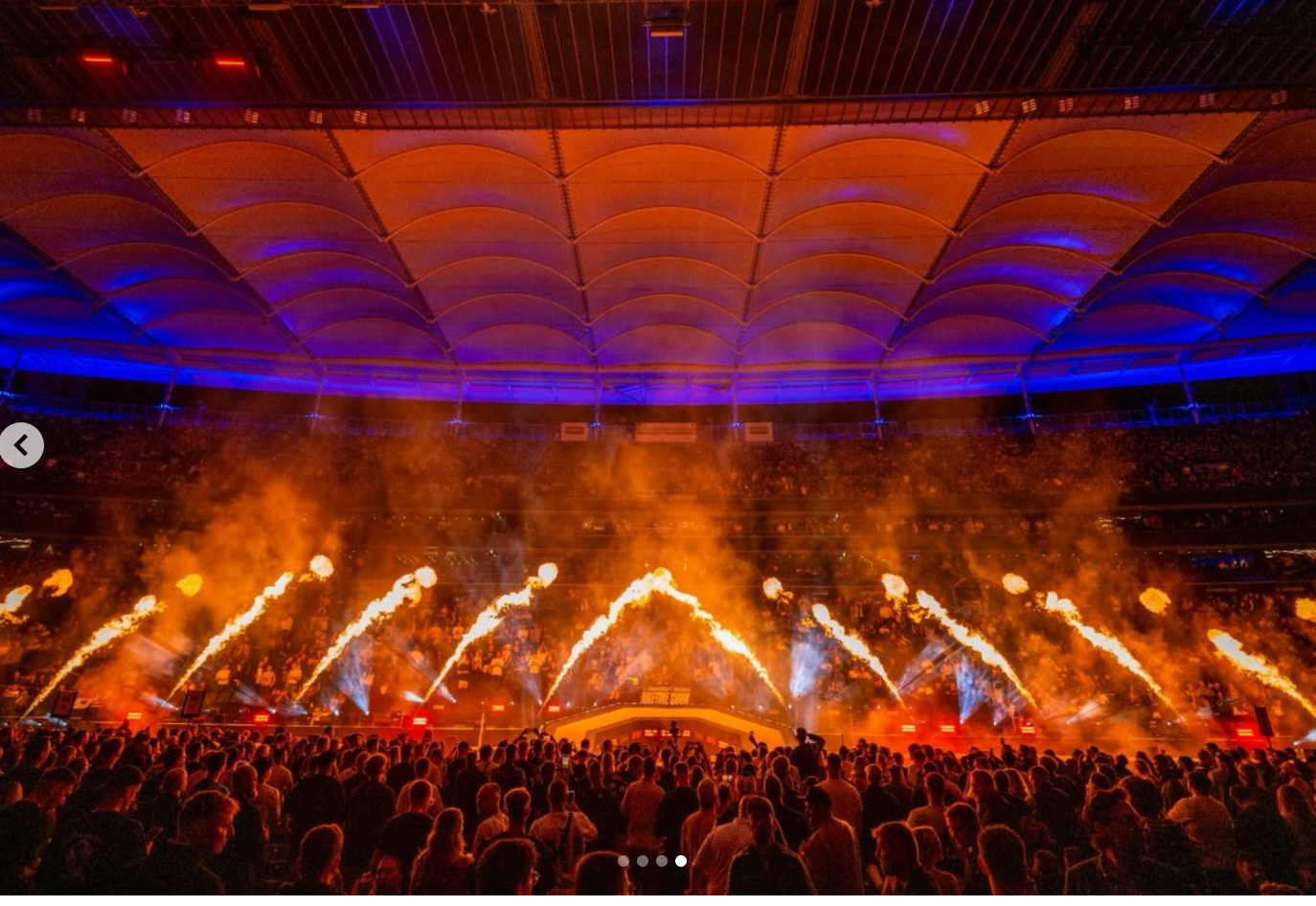
A Francoforte tutto questo era evidente. Il Deutsche Bank Park non è stato utilizzato come un semplice impianto sportivo, ma trasformato in un enorme palcoscenico. Le luci hanno accompagnato ogni momento della serata, gli ingressi degli atleti sono diventati parte della narrazione, i fuochi d’artificio hanno sottolineato alcuni dei passaggi più importanti e la musica ha avuto un ruolo da protagonista. Per non parlare delle immagini notturne dell’impianto oltre che della città di Francoforte. Una cartolina di alto livello per l’intero territorio di riferimento.
Poi l’halftime show. Un vero spettacolo musicale (con l’impiego di ballerine e ballerini professionisti) inserito nel cuore dell’evento, secondo una formula che appartiene alla grande tradizione dello sport entertainment americano e che trova nella NFL uno dei suoi esempi più riconoscibili. Un produttore di fama mondiale infatti si è esibito durante il celebre Konzept Weiss Halftime Show sul palco del Deutsche Bank Park di Francoforte. Nello specifico il compositore e dj di musica elettronica Robin Schulz.
È proprio qui che Oktagon mostra la sua peculiarità. Non si tratta più soltanto di assistere a una serie di incontri di MMA, ma di acquistare un’esperienza complessiva. Lo spettatore entra in uno stadio e viene accompagnato dentro una storia nella quale sport e intrattenimento procedono sullo stesso binario.
È una trasformazione importante per le arti marziali miste europee. Per anni le MMA sono state percepite soprattutto come uno sport di combattimento destinato a un pubblico specializzato. I vertici di Oktagon hanno contribuito a cambiare quella percezione, costruendo un prodotto capace di parlare anche a chi non vive quotidianamente il mondo delle arti marziali. In questo momento nessun’altra organizzazione sportiva riesce a sviluppare un format così interessante e diverso dallo standard.
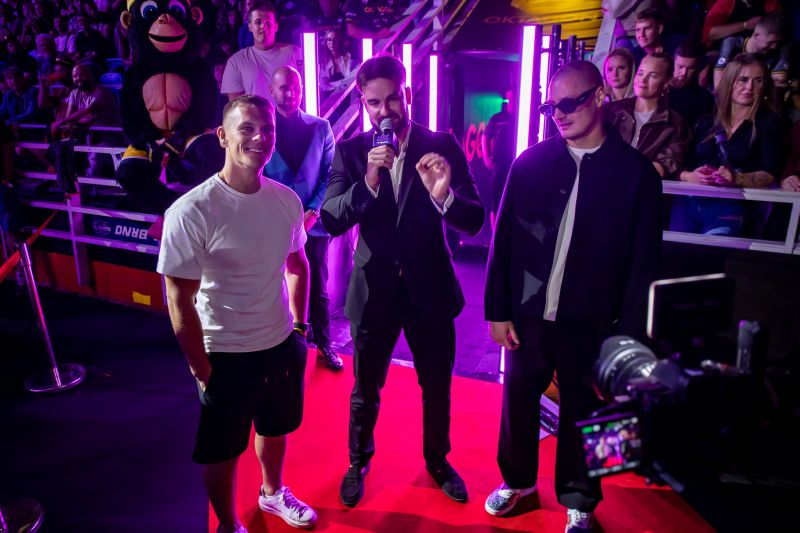
Il paragone con la UFC di Dana White nasce quasi inevitabilmente. Non per stabilire una graduatoria, ma perché entrambe hanno compreso che, ai massimi livelli, le MMA non possono più essere soltanto una mera successione di combattimenti nel corso di una serata.
La differenza sta nel linguaggio con cui ciascuna organizzazione interpreta questo concetto. E Oktagon, in appena dieci anni, ha sviluppato un’identità precisa: europea, spettacolare, televisiva, fortemente legata alla cultura dell’evento dal vivo.
Francoforte è stata una dimostrazione di questa evoluzione. Sessantamila persone in uno stadio, le luci che si spengono, la musica che sale, gli atleti che entrano, la gabbia al centro e uno spettacolo che continua anche quando non si combatte.
È questa la vera rivoluzione di Oktagon: aver capito che il futuro delle MMA non passa soltanto dalla qualità degli incontri, ma dalla capacità di trasformare una serata di combattimenti in un grande evento da ricordare.
Tutto questo è reso possibile anche da una organizzazione aziendale unica in Europa con dipartimenti specifici seguiti da brand manager e da una forza lavoro di età giovanissima capace di cavalcare anche l’onda dei trend del momento.
Le immagini dell’azienda Oktagon MMA e del suo quartier generale (tra Praga e Bratislava) confermano questa tesi. I co-fondatori Pavol Neruda e il suo socio Ondřej Novotný (quest’ultimo tra l’altro anche ring-announcer durante gli eventi) hanno dimostrato di saper lavorare a tutto tondo con una forte caratterizzazione e attenzione per le aree marketing, grafica e comunicazione. Confermando di essere due giovani imprenditori di successo nel settore degli sport da combattimento.
ENGLISH VERSION
Oktagon: When MMA Becomes Entertainment
There are sporting events that you watch. And then there are others that you experience. The event organized yesterday by Oktagon (a promotion based in the Czech Republic) in Frankfurt, alongside the 94th event in its relatively young history, clearly belongs to the second category.
Bringing MMA to the “heart” of Deutsche Bank Park, the home of Bundesliga 1 side Eintracht Frankfurt, in front of around 60,000 paying spectators, does not simply mean putting on a big night of fights. It means having a clear idea of what a combat sports event should be today.
Over the past ten years, Oktagon, an organization founded in the Czech Republic that has progressively expanded internationally — with interests in Germany, Slovakia and, more recently, Poland — has built a model that goes far beyond the cage. The fight is at the center of the show, but an entire universe is built around it, combining music, lighting, stage design, storytelling, technology, spectacular walkouts and entertainment.
In Frankfurt, all of this was evident. Deutsche Bank Park was not used simply as a sports venue, but transformed into a gigantic stage. The lighting accompanied every moment of the evening, the athletes’ walkouts became part of the narrative, fireworks highlighted some of the most important moments, and music played a starring role. Not to mention the nighttime images of the stadium and the city of Frankfurt. A high-level showcase for the entire surrounding area.
Then came the halftime show. A full-scale musical performance, featuring professional dancers, inserted into the heart of the event — a formula rooted in the great tradition of American sports entertainment, with the NFL providing one of its most recognizable examples. A world-renowned producer performed during the famous Konzept Weiss Halftime Show on the stage at Deutsche Bank Park in Frankfurt: electronic music composer and DJ Robin Schulz.
This is precisely where Oktagon reveals what makes it unique. It is no longer simply about attending a series of MMA fights, but about purchasing an overall experience. The spectator enters a stadium and is taken into a story in which sport and entertainment run on parallel tracks.
This represents an important transformation for European mixed martial arts. For years, MMA was perceived primarily as a combat sport aimed at a specialized audience. Oktagon’s leadership has helped change that perception by building a product capable of speaking to people who do not live and breathe martial arts on a daily basis. At this moment, no other sports organization is developing a format quite as interesting and different from the standard model.
The comparison with Dana White’s UFC is almost inevitable. Not to establish a ranking, but because both organizations have understood that, at the highest level, MMA can no longer be merely a succession of fights taking place over the course of an evening.
The difference lies in the language each organization uses to interpret this concept. And in just ten years, Oktagon has developed a clear identity: European, spectacular, television-friendly, and deeply connected to the culture of the live event.
Frankfurt was a demonstration of this evolution. Sixty thousand people in a stadium, the lights going out, the music building, the athletes making their entrances, the cage at the center — and a show that continues even when nobody is fighting.
This is Oktagon’s real revolution: understanding that the future of MMA depends not only on the quality of the fights, but also on the ability to turn a night of combat into a major event that people will remember.
All of this is also made possible by a unique organizational structure in Europe, with dedicated departments overseen by brand managers and a remarkably young workforce capable of capitalizing on the latest trends.
Images of Oktagon MMA as a company and of its headquarters — located between Prague and Bratislava — further support this thesis. Co-founders Pavol Neruda and his business partner Ondřej Novotný (who also serves as the ring announcer during events) have demonstrated an ability to manage the organization across the board, with a strong focus on marketing, graphic design and communications.
In doing so, they have established themselves as two successful young entrepreneurs in the combat sports industry.